Thursday, October 11

Spirit of a church lives on


One of the more interesting mornings on my trip to Hamburg in September was spent at the St. Nikolai Memorial, “a place of commemoration for the victims of war and persecution 1933-1945.”
This church was founded in 1195 and is one of the oldest churches in Hamburg. It burned and was re-built in 1874.

During air raids conducted by British and America bombers in World War II the church steeple, 483 feet high above the ground, served as a landmark for bomber pilots. The church was destroyed, only the steeple and parts of the walls survive to this day. 


The Lutheran Bishop refused re-building after the war, deciding instead on a memorial for the victims of war. 


The morning was clear and a ride in the lift to the top of the steeple gave me a splendid view of the entire city. This is one view.


The Carillon, (visible in the lower half of the pictured steeple) erected in in 1993, played a soft, delightful melody adding to the enjoyment of the moment.
In the crypt of the church (entered via the glass structure in front of the  steeple) there is a permanent exhibition (library, scheduled panel discussions, lectures and educational films) outlining the massive destruction of Hamburg, primarily by English Royal Air Force bombers. In one ten day period in the summer of 1943, 35,000 people were killed, 120,000 were injured and almost a million subsequently fled the city. To keep this horrendous destruction in perspective, however, the exhibition also details the role of the German Luftwaffe in the bombing and destruction of Guernica, Spain, during the Spanish Civil War, and the bombing and destruction of Warsaw, Coventry, and Rotterdam and the massive bombing of London. The destruction of Guernica from the air is understood to be the first such act of war carried out by aircraft. 
(Click here for other posts in this blog.)

(To decline future posts, reply to this e-mail with REMOVE)

Tuesday, October 9

16 Days of Pure Fun


In sixteen wonderful, fun-filled days I recently visited four countries and enjoyed the sights and sounds of London, France, The Netherlands and Germany. I joined throngs of people visiting Buckingham Palace and Windsor Castle to visit the State rooms (where official receptions are held). Some of these individual rooms are larger in size than my one bedroom apartment at Franke.
A boat from Portsmouth in Southern England took me to the Normandy peninsula and my first stop was at the American Cemetery at Colleville-sur-Mer, a place of remembrance and reflection where 9387 American servicemen and women lay at rest, many of them killed on D-Day 1944. 
I went on to other places that many Americans know only from movies, e.g. Omaha Beach (“The Longest Day”) and Point de Hoc (“Saving Private Ryan.”) To stand there and try to imagine what it was like on June 6, 1944, is to take a deep breath and let it out as you feel your eyes water.
I traveled to Der Hag in The Netherlands to sit in on the trial of the war criminals from Yugoslavia, however, arrangements to enter the court needed to be made in advance.
Moving on by train to Hamburg, Germany, my first stop was the “Miniatur Wunderland,” the world’s largest model railway and, most recently, airport, exhibition. The major purpose of my trip was to see this famous creation of varied scenes adapted from Switzerland, Scandinavia, America, Germany, and Bavaria complete with miniature trains, airplanes, vehicles, and representations of people.
A tour boat around the amazing harbor enlightened me me why Hamburg is the world’s second largest port. Only Rotterdam is bigger, I was told.
In addition to visiting the palaces in London, I rode the London Eye, a Ferris wheel with sealed cars which lift the visitor for a fantastic view of Parliament and the entire city. I also took in a major exhibition of the Cecil Beaton's wartime photography 1939-1945. 
Because of my previous work background and long-time personal interests I visited the headquarters of MI 6, the British Secret Intelligence Service. I asked a Londoner to take my picture outside the building (dedicated by the Queen in July 1994) on the bank of the River Thames at Vauxhall Station and he said, “Sorry mate, I can’t take a picture of that building.” (

I had less trouble taking a picture at the Sherlock Holmes Museum on Baker Street.
The trip was great, but I am happy to be home.

(For the complete blog click here.)


Saturday, October 6

Operation R&R

(Published, October 6, 2012.)
 
Letters to the Editor
The Post & Courier
Charleston SC

Dear Sirs:

The vacation gift Operation R&R extends to active duty military families means much more to me this week. I just returned from a trip to France where I visited the Normandy American Cemetery and Memorial in Colleville-sur-Mer near Omaha Beach. 
Dedicated in July 1956, the cemetery is the resting place for 9,387 American servicemen and women who gave their lives on D-Day or shortly thereafter. It is impossible to look out over the headstones, both Latin crosses and Stars of David, without feeling love and admiration for those young people who gave so much for all of us. 
I am not ashamed to admit that as I stood silent and said a prayer tears came to my eyes thinking about what life would have been for these fallen warriors.
The volunteers, merchants and home owners who contribute to Operation R&R are doing a good and well-deserved thing for this generation of servicemen and servicewomen who have been deployed in the past 12 months, are married and still on active duty.
The local chapter of Operation R&R can be supported by going to www.charleston.operationrandr.org.

Friday, October 5

Birthday gift of a lifetime


Today, October 2, 2012, I turn 81. Yesterday I selected a birthday gift for myself that I have never had before. I bought the first bedroom suite which is new and personal to me in my entire life: a three-piece Cherry finish bed frame with trundle for storage, a five-drawer chest and nightstand.  
When I was a boy, I slept in an iron bed with a brother who was a couple of years younger. There was a dresser for clothes but they didn’t match. I suspect each piece was handed down from somewhere else in family, most likely grandparents. When I became a teen-ager I moved to a single iron bed (another hand-me-down) in the room and my two younger brothers shared the bigger bed. These were the great depression years followed by WWII, and my single-parent mother did her best.
I went in the Air Force shortly after high school and slept on a variety of bunks, cots and beds. After almost three years, I started to live off-base and shared furnished apartments in Washington with another Air Force investigator.
When I married Mary in 1954, we also lived initially in furnished apartments in Washington, D.C., and later in Charleston. In 1955, rentals in Charleston were hard to come by and mostly consisted of apartments carved into big homes where these were full of furniture from generations past. In Charleston, no one throws anything away until it disintegrates.
When the children started to come along we set up in houses and were given some basic furniture from relatives, mostly Mary’s family. My paternal grandmother gave us a great wooden table we used in the kitchen for years and later re-did and continued to use. Some furniture we bought second-hand. I don’t recall three or four pieces of bedroom furniture that were part of the same set. It didn’t bother us. We were young, making our way and had a roof over our heads and a comfortable bed. (Mattresses were the most important thing and were always ours.)
After a couple of years in a starter house we bought a larger house in 1964 that would be our home for the next 44 years. We began with a kitchen table and chairs where we took our meals and concentrated on furnishing the living room. Then we worked on the dining room, although we reserved its use for holidays and special occasions, like when family or out of town friends came for Sunday dinner. There were five children and multiple bedrooms to outfit in one way or another, piece by piece, but ultimately we started to talk about “doing over” our bedroom. Before we could bite the bullet Mary’s mother passed away in 1976.  A couple of years earlier she had purchased a five-piece bedroom suite and we inherited it. It was quality furniture, looked great, served us well and saved us money.
By 2005, the bed frame from the inherited suite was on its last legs and we replaced it with a Scandinavian style bed and foam mattress. Now, we had a new bed and three older pieces, which blended fairly well. A not uncommon state of affairs among middle class families in South Carolina.  
In 2007, Mary was in an assisted living facility and I closed out our house six months later.  I gave away, sold and threw out all kinds of furniture. I kept the bed and two inherited pieces. I moved these into a one bedroom apartment on the same campus with Mary. About a year ago I replaced the inherited nightstand.
And then Friday night, September 28, 2012, I turned on the lights in my bedroom, looked and laughed: a chest of drawers going back almost 40 years, a bed and a nightstand that were close but not really a matched pair. Three separate pieces whose only connection was holding my body, some of my clothes and my accessories. It looked like the bedroom, which also holds a comfortable wing-back chair and floor lamp, had been furnished from separate garage sales. This goes beyond even Southern acceptance, I said.
Delivery is Thursday.

Tuesday, September 4

To correct the record

Last week I wrote about the National Do Not Call list for cell phones. I relied on a usually most reliable source for my information. Today I learned there is no separate National Do Not Call list for cell-phones.  There is just one National Do Not Call list. You may list your cell-phone on this list. Sorry for the confusion.
A lengthy explanation of all this is available at the Federal Communications Commission web site.

Sunday, September 2

Do Not Call Registry

Your cell phone number is going to be turned loose this month and telemarketing companies will be able to call you (at your expense) and make a hard sell pitch.A note in the most recent issue of AFOSISA Global Alliance, gives this Federal government web site where you can list your phone numbers, including cell numbers, on a "do not call" list. I went there this morning and listed my land line and cell number. I found it straight forward and easy to use. There will be a couple of e-mails you have to respond to; these are to assure someone is not playing games with your phone numbers and desires.

(If you wish to be removed from this occasional e-mail list send REMOVE BLOG LIST to arch@archibald99.com.)


Wednesday, August 29

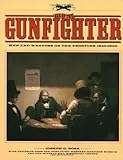
The Myth of the Gunfighter

Remember when you sat in the movie theatre on a Saturday afternoon and watched two men walk slowly down the dusty street toward each other. Merchants shuttered doors. Women whisked children off the street. The bad guy was unshaven, snarling and he wore a black hat. The good guy was tall, handsome and looked magnificent in his white Stetson. The music came up in the background and you stopped putting popcorn in your mouth as the bad man's hand moved toward the pistol on his hip.

Great stuff from Hollywood (and pulp novels), but far from factual, Joseph G. Rosa tells us. Gunfighters of the old West were more imagination than fact. Of course, the code of the entertainment world is, "When the legend is greater than reality," print the legend.
  
Joseph G. Rosa is a historian of the Wild West, author, and the chief biographer of Wild Bill Hickok as well as several other figures of this period.

Mr. Rosa makes his case for setting the record straight in his new book:

Age of the Gunfighter: Men and Weapons on the Frontier, 1840-1900. by Joseph G. Rosa. University of Oklahoma Press. Paperback
 

Saturday, August 25

The first Medicare Card

Do you know who got the first Medicare card? Harry Truman. In 1965, President Lyndon Johnson moved the Medicare bill signing from Washington, D.C., to Independence, MO. so former President Truman could be on hand for the signing and receive the first card. This was a tribute to Mr. Truman's efforts 20 years earlier to create a national health insurance plan. (The President's Club, Nancy Gibbs and Michael Duffy. New York, Simon & Schuster, 2012.)
 

Tuesday, August 14

ABA awards hghest honor to Morris Dees

Morris Dees receives American Bar Association’s highest honor

Morris Dees, co-founder of the Southern Poverty Law Center, was recognized Tuesday for a legal career dedicated to seeking justice and equality for all when the American Bar Association presented him with the ABA Medal – the organization’s highest award.
Dees, honored during the association’s annual meeting in Chicago, received a standing ovation from the ABA’s House of Delegates, the association’s policymaking body of more than 500 members.
“I am honored and humbled to receive this award from the American Bar Association,” Dees said afterward. “But this award isn’t just about me. It’s also a tribute to the talented SPLC employees dedicated to ensuring that what began as a small civil rights law firm I helped found four decades ago will always be there for the disenfranchised.”
The ABA Medal, which recognizes “exceptionally distinguished service by a lawyer or lawyers to the cause of American jurisprudence,” is given only when the ABA Board of Governors determines a nominee “has provided exceptional and distinguished service to the law and the legal profession,” according to the ABA.

SPLC Founder Morris Dees accepts his award from the ABA.
“The presentation of the ABA Medal to Morris Seligman Dees Jr. represents our profound admiration for his personal courage and incomparable leadership as one of the greatest civil rights lawyers of our time,” said outgoing ABA President Wm. T. (Bill) Robinson III. He said Dees is “an outstanding example of a lawyer who, case by case, is moving our country toward tolerance and equality.”
Previous ABA Medal recipients include Supreme Court Justices Oliver Wendell Holmes, Felix Frankfurter, Thurgood Marshall, William J. Brennan Jr. and Sandra Day O’Connor. Other recipients include Watergate Special Prosecutor Leon Jaworski; Judge Patricia Wald, a member of the International Criminal Tribunal for the former Yugoslavia; and human rights activist the Rev. Robert Drinan.

Friday, August 10

No applause at horse shows


Ever wonder why there is little to no applause during horse shows, and what there is is often subdued? 
Several years ago I went to a horse show in Vienna, Austria, where the famous Lipizzaner Stallions  were performing. During this fabulous performance I was a standee in the second balcony looking down on horses and riders. When the performance was over the audience remained respectful as the riders and horses gracefully retreated to the stalls. Without warning I was seized with a loud burst of repetitive sneezing and several really loud ah-choos rocked the hall. I made so much noise the horses bolted, reared up and almost threw riders. The audience on the first level instantly turned their gaze my way; I thought my fellow standees on the balcony would throw me into the arena. I tried to apologize silently with an embarrassed face but that did not go over well with anyone. Although I could not understand all the comments I got the message to exit quickly and quietly. After the horses had cleared the arena, loud applause showed appreciation for, I am sure, the performance, and not my sneezing. 

For more blog entries see: www.archibaldinsc.blogspot.com
To be removed from this list send "remove" e-mail to: arch@archibald99com
 

Tuesday, August 7

Government workers

Many of the men and women who put Curiosity on Mars on Sunday are federal government workers who often are criticized. Hope some of the critics will pause to admire and praise this magnificent accomplishment. And to think most of the equipment and parts of Curiosity came from the lowest bidders...
Well done!

Wednesday, July 18

Women's breasts

A new book is out dealing with women's breasts. (Breasts: A Natural and Unnatural History, by Florence Williams).
A delightful review of this new book may be found here. About six hundred years ago, according to the review, Henri de Mondeville wrote to the King of France, "The reasons why the breasts of women are on the chest, whereas other animals more often have them elsewhere, are of three kinds. First, the chest is a noble, notable and chaste place and thus they can be decently shown. Secondly, warmed by the heart, they return their warmth to it so that this organ strengthens itself. The third reason applies only to big breasts which, by covering the chest, warm, cover and strengthen the stomach".
Also, according to the review, men viewed large breasts as a sign of a desirable woman for breeding. It is not recorded how women over the ages have looked upon that premise as a basis for mating. Also when women started having breast implants they had the last laugh on the men. As George Carlin used to say, "Women are crazy. Men are stupid. And men are stupid because women are crazy."


Thursday, July 12

A dear friend - Dot Ruotolo

I was saddened this morning to read in the local paper of the passing of a dear friend, Dorothy J. Ruotolo, at age 84. Our relationship goes back several decades. In the early sixties my wife and I were attending Mass on a beautiful Sunday morning. Mary was not then a Catholic. She was struggling with the Catholic missal and keeping up with the service when a lady in the pew behind us reached over and pointed in the missal to where the service was and helped Mary stay connected. Later, she told us she had similar problems earlier in her life. Very quickly we learned Dot was also a teacher in the Catholic school and would be the one to introduce our boys to the first grade. We formed a friendship on that Sunday morning and it continued for years. At one point when her son joined the Air Force, I talked to Dot about my eight years in that service and helped to ease her mind that her son had made a great choice. He would go on to a fine career and be honorably retired. Dot also had a daughter who worked at the Naval Supply Systems Command Center where I was the security director. She was a fine young lady and excellent employee. Dot spent many years teaching in Catholic schools and was a friend to thousands of families in North Charleston, Hanahan and Goose Creek. She will be missed by all, including her many students who got a great start on their education in her first grade. She was preceded in death by her husband Michael, a fine gentleman.